


Custom Fish Decals for Boats: Materials, Sizing and Application
Quick Summary
Custom fish decals for boats are vinyl graphics cut to your hull's size and colours, chosen for marine-grade durability. Measure the application area first, pick UV-protected cast vinyl for saltwater, and order mirrored pairs for balance.
- Choose marine-grade, UV-protected vinyl, since it holds colour far longer than generic stickers.
- Cast vinyl has less memory and conforms better to curves than calendered vinyl.
- Measure the exact application area and leave a margin clear of rails, hatches and the waterline.
- Mirrored pairs give a left-facing and right-facing piece so both sides of the hull match.
- Clean with detergent, degrease with isopropyl alcohol, and apply only when the surface is dry.
Table of Contents
- What Makes a Custom Fish Decal Worth Buying
- Choosing Marine-Grade Vinyl That Survives Salt and Sun
- Sizing and Custom Dimensions for Your Hull
- Species Choice, Colour Customisation and Mirrored Pairs
- Pricing Guide: What Fish Decals Cost in AUD
- Boat Decal Application: Surface Prep to Final Press
- Ordering Your Custom Fish Decals and Planning Removal Later
- Frequently Asked Questions
What Makes a Custom Fish Decal Worth Buying
Last Updated: November 14, 2026
Custom fish decals for boats are one of the simplest ways to make a vessel look finished and personal. A well-made decal lifts a plain hull, signals what you fish for, and gives you a bit of identity on the water. But not every decal is worth the money. Some peel within a season, fade to chalky grey, or arrive the wrong size for your hull.
At Mega Sticker Store, we make Australian-made custom vinyl decals for boats, caravans, motorhomes and 4WDs. Here is what separates a good custom fish decal from a cheap one, and what to check before you order.
Start with the material. A decal is only as durable as its vinyl, its laminate and its adhesive. Marine-grade vinyl that is UV-protected and designed for outdoor use will hold its colour far longer than a generic sticker. The next thing to check is the design itself. A clean, computer-cut outline with no printed background looks sharp on a hull. Fine detail on the fish, such as scales and fin shading, should stay crisp once it is applied.
Size matters just as much. A fish decal that looks perfect on a screen can look tiny or overwhelming on a 5-metre hull. We cover how to measure this later in the article.
Finally, look at how the decal is supplied. Mirrored pairs are useful because they give you a left-facing and a right-facing piece, so both sides of the boat match. Check whether the seller makes custom colours and sizes, or only offers a fixed range.
Choosing Marine-Grade Vinyl That Survives Salt and Sun
Marine conditions are hard on any sticker. Salt spray, constant UV exposure and regular washing all work against adhesion and colour. The vinyl you choose decides how long the decal keeps its look, and the single biggest variable is how the film was manufactured.
The difference between a decal that lasts a short time and one that lasts for years often comes down to cast versus calendered vinyl. Calendered vinyl is made by pressing PVC through rollers, which leaves internal stress in the film so it can shrink back over time. Cast vinyl is poured onto a liner as a liquid and cured, so it has less memory and conforms more readily to curves.
Film thickness is also worth asking about, since thinner films can tear more easily at the edges. The laminate on top matters just as much, and a gloss overlaminate with UV protection helps the colour underneath survive washing and exposure.
Adhesive is the third piece to consider. If a listing does not state the adhesive type, it is worth asking the seller before you buy.
Treat any lifespan claim as the manufacturer's estimate and check how the product is described on its listing before relying on it.
A common mistake is choosing a decal based only on price. A cheaper thin vinyl can look fine for a few months, then lift at the edges where water gets under it. If you fish in saltwater, the marine-grade cast option is worth the extra cost, and the difference in service life usually pays for itself before the first replacement.
Sizing and Custom Dimensions for Your Hull
Measure before you buy. Decide where the decal will sit, such as the bow, the side panel, the transom or the tow vehicle, and measure that exact area. Leave a margin so the decal does not run into rails, hatches, or the waterline.
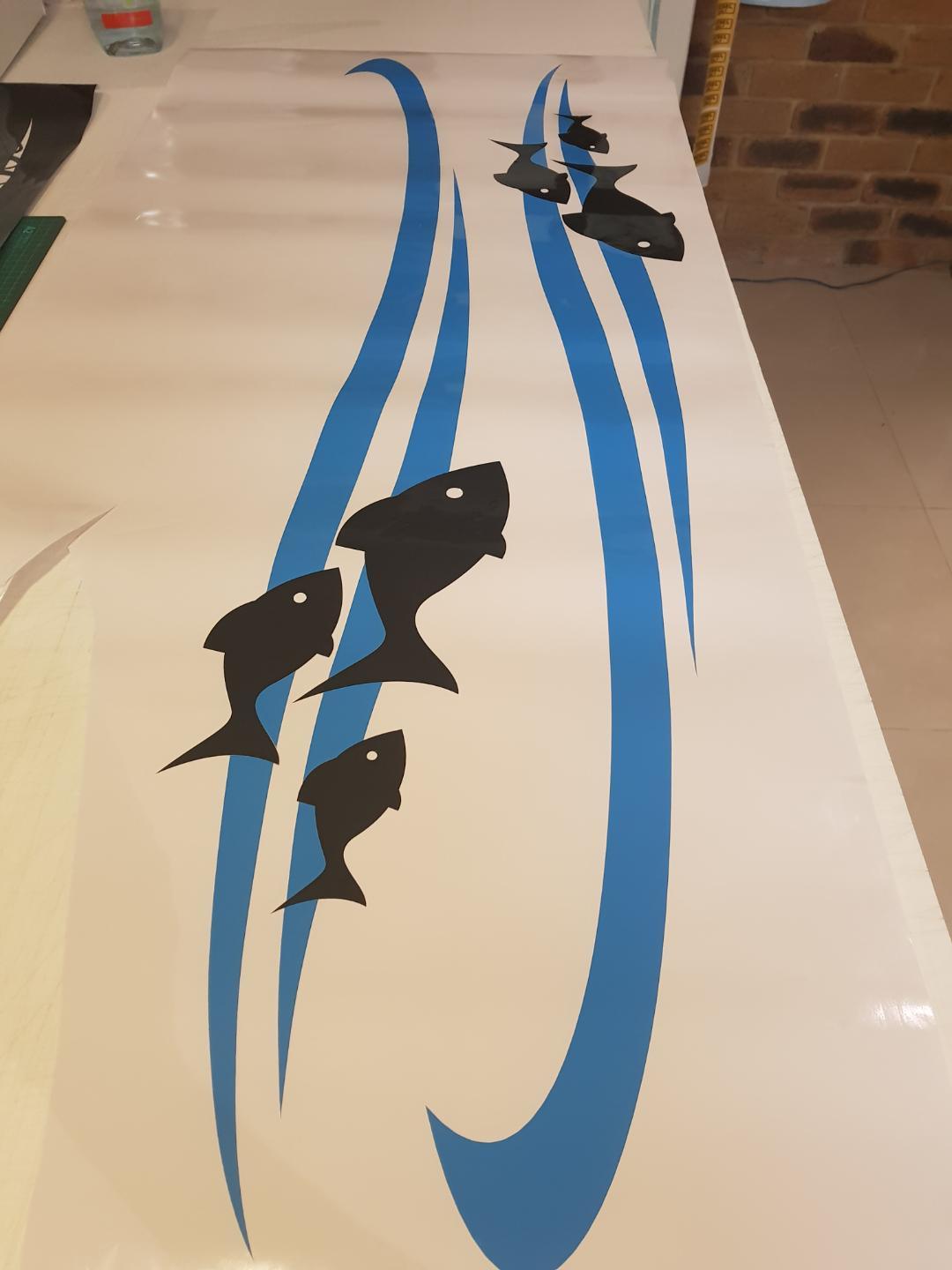
Our fish stripe decals come in several sizes, and custom sizes can be made on request. For a long, low hull, a longer stripe often looks more balanced. For a smaller tinnie, a shorter piece with a larger fish graphic can work better.
Test the proportions before you commit. Tape a sheet of paper to the hull at the size you are considering and step back from the boat. If it looks right from the dock, it will look right on the water.
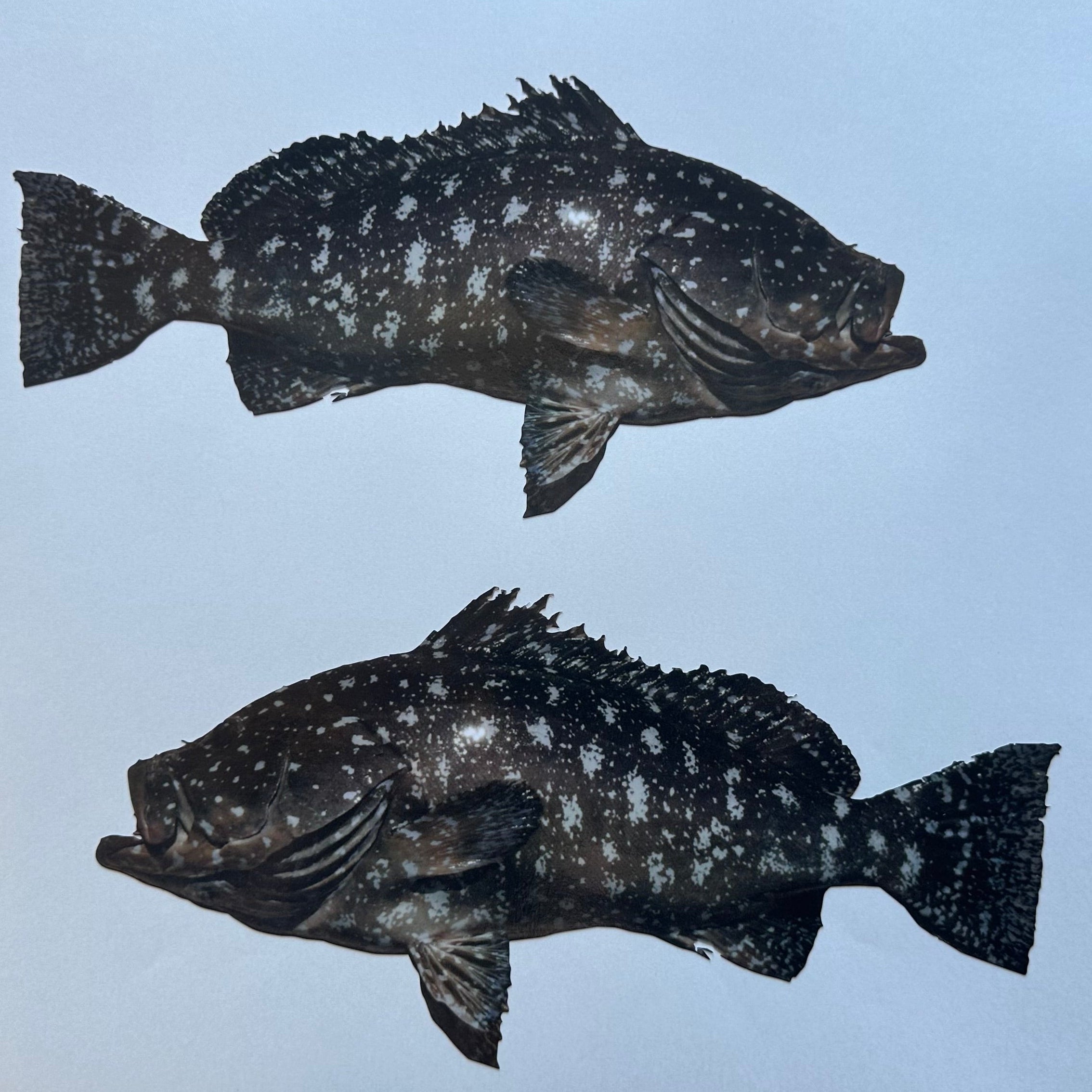
Mirrored pairs make sense for most hulls. Our fish stripe sets include two mirrored pieces, which keeps both sides balanced. Our Rankin cod decal is sold in 30cm or 50cm lengths, so check which size suits your boat before ordering.
Species Choice, Colour Customisation and Mirrored Pairs
Pick the design that matches how you fish, whether that is a shark design, a Rankin cod graphic or a stylised fish stripe.
Colour is where most buyers get specific. Our standard fish stripe colours are Black and Sky Blue, with other colours available on request. If you do not specify colours when ordering, we send the vibrant hues shown in the product images. Add your colour preferences in the order notes at checkout so there is no guesswork.
Our Teal and Black fish stripe pair is a two-colour design sold as a mirrored set. If you want a different colour pairing, ask us before ordering.
Mirrored pairs are supplied as two pieces, one left-facing and one right-facing, which keeps both sides of the hull balanced.
Pricing Guide: What Fish Decals Cost in AUD
Our current prices for the fish decals in this guide are:
- Custom Fish Stripes for Vehicles, $130.00 AUD
- Custom Boat Stripe Stickers, $140.00 AUD
- Teal and Black Fish Stripe Decals, $65.00 AUD
- Fish Stripe Decals for Boat, Motorhome and Caravan, $110.00 AUD
- Rankin Cod Boat Decal, $45.00 AUD
Prices vary with size, colour and design. The larger sizes and custom colour work cost more than the standard options. The Rankin cod decal is the lowest-priced item here and suits a single feature piece on a ute or hull. For a full side stripe, the fish stripe sets are the better fit.
Before you order, check whether the price includes the mirrored pair and whether custom colours are an extra charge.
Current prices of fish decals in AUD
Boat Decal Application: Surface Prep to Final Press
Good application matters as much as good vinyl. A decal that is applied to a dirty or oily surface will lift no matter how well it was made, and most early failures trace back to preparation rather than the product.
Start with a two-stage clean. Wash the hull with a mild detergent and rinse it to remove salt, dust and grime. Then wipe the exact application area with a wax and grease remover or isopropyl alcohol on a clean microfibre cloth, turning the cloth as it picks up contamination. Gelcoat carries mould-release agents and polish residue that detergent alone will not shift, and adhesive cannot bond to either. Let the surface dry completely; a damp or cold hull is the most common reason edges lift early. Most practitioners apply in mild, dry conditions, roughly between 15°C and 30°C, because cold vinyl is stiff and does not conform, while direct sun makes the film too soft to position accurately.
Check the surface itself before you commit. Gelcoat that is chalky, porous or flaking will not hold a decal, and neither will a recently painted hull that has not fully cured. If the area feels rough, a light cut and polish followed by another dewaxing wipe gives the adhesive a sound substrate.
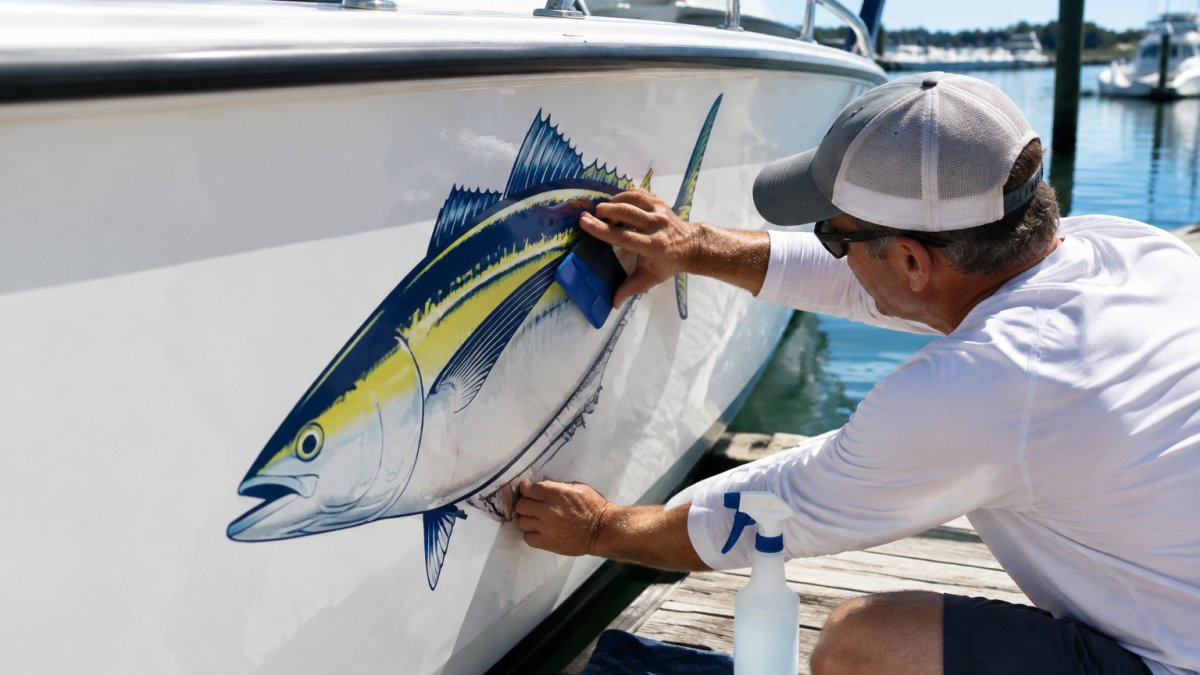
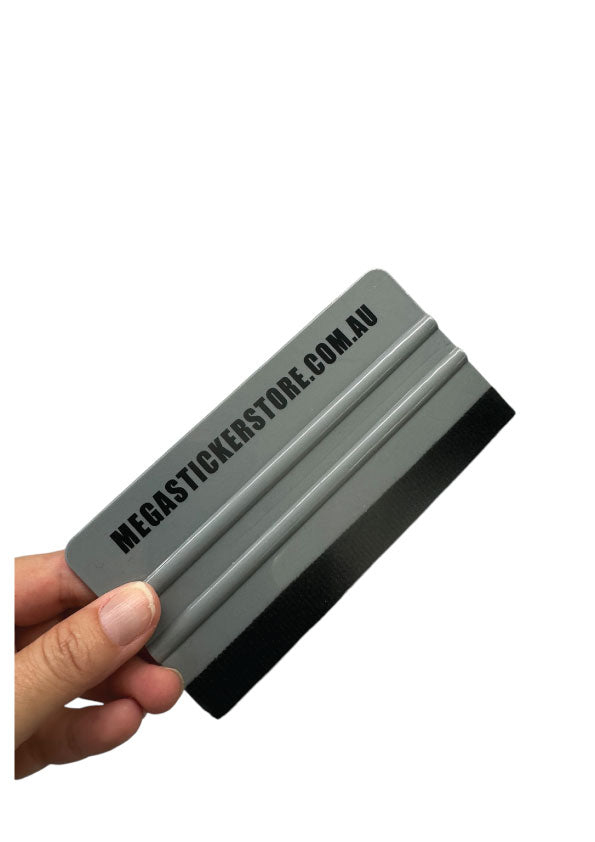
Position the decal with the backing paper still on. Use masking tape to mark the placement and check it from a distance. Once you are happy, peel back one end of the backing, align it with the tape and press it down. Work from the centre outwards with a squeegee to push out air bubbles, removing the backing slowly as you go. On a curved or riveted hull, a little gentle heat from a hair dryer helps the film stretch without creasing.
Once the decal is down, press it firmly once more, especially along the edges. Avoid pressure washing the decal for at least a few days to let the adhesive settle.
Watch out: applying a decal in cold or damp weather is one of the most common reasons edges lift early. Wait for a dry, mild day.
Plan for removal before you apply, because every decal comes off eventually. Vinyl is easier to take off when it has not been left in direct sun for years, and sharp metal tools can scratch gelcoat or paint.
The steps below summarise the application process, with the timing and conditions the article gives for each.
| Stage | What to do | Timing or condition |
|---|---|---|
| Clean | Wash hull with mild detergent, rinse | Remove salt, dust and grime |
| Degrease | Wipe area with wax and grease remover or isopropyl alcohol | Use clean microfibre cloth |
| Dry | Let surface dry completely | Damp or cold hull causes early lifting |
| Temperature | Apply in mild, dry conditions | Roughly 15°C to 30°C |
| Position | Mark placement with masking tape, check from distance | Backing paper still on |
| Press | Squeegee from centre outwards, remove backing slowly | Use gentle heat on curves |
| Settle | Avoid pressure washing | At least a few days |
Ordering Your Custom Fish Decals and Planning Removal Later
To order, choose your design, size and colour, then add your colour preferences and any custom size requests in the order notes. Measure your application area first so you order the right size. If you are unsure, send us a message before you buy and we will help you choose.
Plan for removal before you apply. Vinyl decals are easier to take off when they have not been left in direct sun for years, and sharp metal tools can scratch gelcoat or paint.
Keep a note of the decal size and colour so you can match a replacement later if one section is damaged.
Frequently Asked Questions
What material is best for boat decals?
Marine-grade, computer-cut vinyl with a UV-resistant gloss overlaminate is the best choice for most boats. It is built to handle sun, water and the elements. Mega Sticker Store's Rankin Cod decal, for example, is marine-grade, outdoor waterproof vinyl with a UV-resistant gloss overlaminate and is die-cut with no background, priced from $45.00 AUD.
How do you apply vinyl decals to a boat?
Clean the surface and let it dry fully before applying. Ensure the surface is clean, dry and free from dirt and grease before you apply the decal.
How long do boat decals last?
Quality marine-grade vinyl decals typically last several years outdoors when properly applied and kept clean. Fish stripe decals from Mega Sticker Store are made from premium 7-year vinyl, so that is the service life to plan around, though exposure to harsh sun and frequent cleaning with abrasive products will shorten it. Keeping the decal away from fuel spills and pressure washing at close range helps it last longer.
Can you customise a fish decal with a species, size or colour?
Yes. Mega Sticker Store offers custom fish stripes and decals in a range of colours, including black, sky blue, white, red, teal, royal blue and orange, on request when you order. Sizes are available in several dimensions, such as 1200mm x 280mm, 2400mm x 560mm and 3000mm x 700mm for stripes, and 30cm or 50cm lengths for the Rankin Cod fish decal. Special sizes and designs can be made on enquiry.
