Skip to content
We Ship Internationally
Custom Orders Welcome
Fast Turnaround

News

Custom Boat Decals 101: A Beginner's Guide to Mastering Marine Vinyl Graphics

by Claire King 28 Dec 2025

Getting your boat looking sharp with custom decals doesn't have to be complicated. Whether you're wanting to add your boat's name, registration numbers, or some eye-catching graphics, this guide will walk you through everything you need to know about marine vinyl graphics and how to make them work for your vessel.

Boat decals are more than just decoration – they're a way to personalize your pride and joy while meeting legal requirements and adding that professional touch that makes your boat stand out on the water.

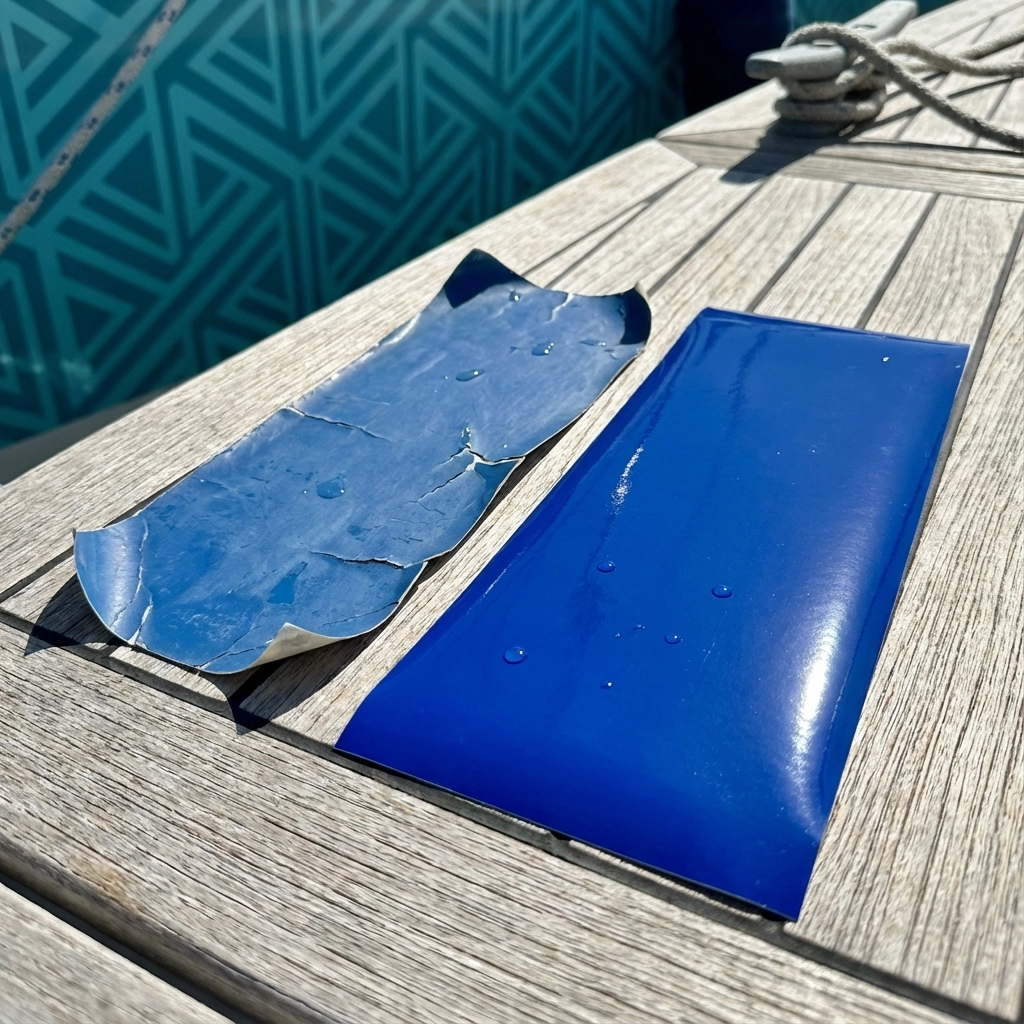
Why Marine Vinyl Is Different From Regular Vinyl

You might be wondering why you can't just use any old sticker on your boat. Here's the thing – marine environments are brutal on regular materials. Your boat faces challenges that a car never will.

UV Protection That Actually Works Marine vinyl contains special UV inhibitors that prevent fading and cracking under intense sun exposure. Regular vinyl will start looking chalky and peeling within months on a boat, while quality marine vinyl maintains its color and adhesion for years.

Superior Water Resistance While regular vinyl might claim to be waterproof, marine vinyl is designed for constant water exposure. It won't lift at the edges when your boat gets splashed or when you're hosing it down after a day on the water.

Salt Water Won't Destroy It Salt is incredibly corrosive, and regular adhesives simply can't handle the constant salt exposure. Marine vinyl uses specialized adhesives that maintain their bond even in saltwater conditions.

Temperature Extremes Boats get incredibly hot sitting in the sun, then cool down rapidly when you hit the water. Marine vinyl is engineered to expand and contract without losing adhesion or cracking.

image_1

Types of Boat Decals You'll Need

Let's break down the different types of decals you'll encounter as a boat owner:

Registration Numbers Every state requires boat registration numbers to be displayed prominently. These need to be:

  • A specific size: 150mm high minimum (check the specific requirements for your state, as regulations can vary)
  • High contrast colors (dark letters on light hull or vice versa)
  • Placed on both sides of the bow
  • Unobstructed and clearly visible

Boat Name Graphics Your boat's name is its identity. Popular options include:

  • Simple text in classic fonts
  • Text with decorative elements or shadows
  • Custom designed logos incorporating graphics
  • Stylized lettering that matches your boat's personality

Custom Graphics and Logos This is where you can really get creative:

  • Company logos for business boats
  • Fishing-themed graphics for fishing boats
  • Flame designs for performance boats
  • Marine life illustrations
  • Abstract designs and patterns

Safety and Information Decals Don't forget about practical decals:

  • Emergency contact information
  • Capacity warnings
  • No wake zone reminders
  • Fuel type indicators

Design Tips That Actually Work for Boats

Designing for boats has unique challenges. Here's how to get it right:

Consider Viewing Distance Your boat name needs to be readable from at least 50 feet away. A good rule of thumb is 1 inch of letter height for every 10 feet of viewing distance.

Work With Your Hull Shape Boat hulls aren't flat like car doors. Consider how your design will look on curved surfaces:

  • Long, horizontal designs work well on straight sections
  • Avoid designs that span both curved and flat areas
  • Consider breaking longer text into multiple lines

Choose Colors Wisely

  • High contrast is essential for readability
  • Light colors show dirt more easily
  • Dark colors fade faster in intense UV
  • Consider your boat's existing color scheme

Font Selection Matters

  • Bold, sans-serif fonts read better from distance
  • Avoid thin or decorative fonts for primary text
  • Script fonts work well for accent elements
  • Consider the boat's style – elegant fonts for cruisers, bold fonts for fishing boats

image_2

Popular Boat Decal Ideas That Look Great

Here are some tried-and-true design approaches that work well on boats:

Classic Name Styles

  • Simple block letters in contrasting colors
  • Script fonts with decorative flourishes
  • Text with drop shadows for dimension
  • Outline letters for a bold look

Themed Graphics

  • Fishing boats: Marlin, tuna, or local fish species
  • Sailing boats: Compass roses, anchors, or sailing motifs
  • Performance boats: Flames, racing stripes, or speed-inspired designs
  • Family cruisers: Nautical themes or custom family graphics

Stripe Packages Vehicle stripes aren't just for cars – they work beautifully on boats too:

  • Hull waterline stripes
  • Accent stripes along the gunwale
  • Racing-style stripes down the center
  • Multiple parallel stripes for a sporty look

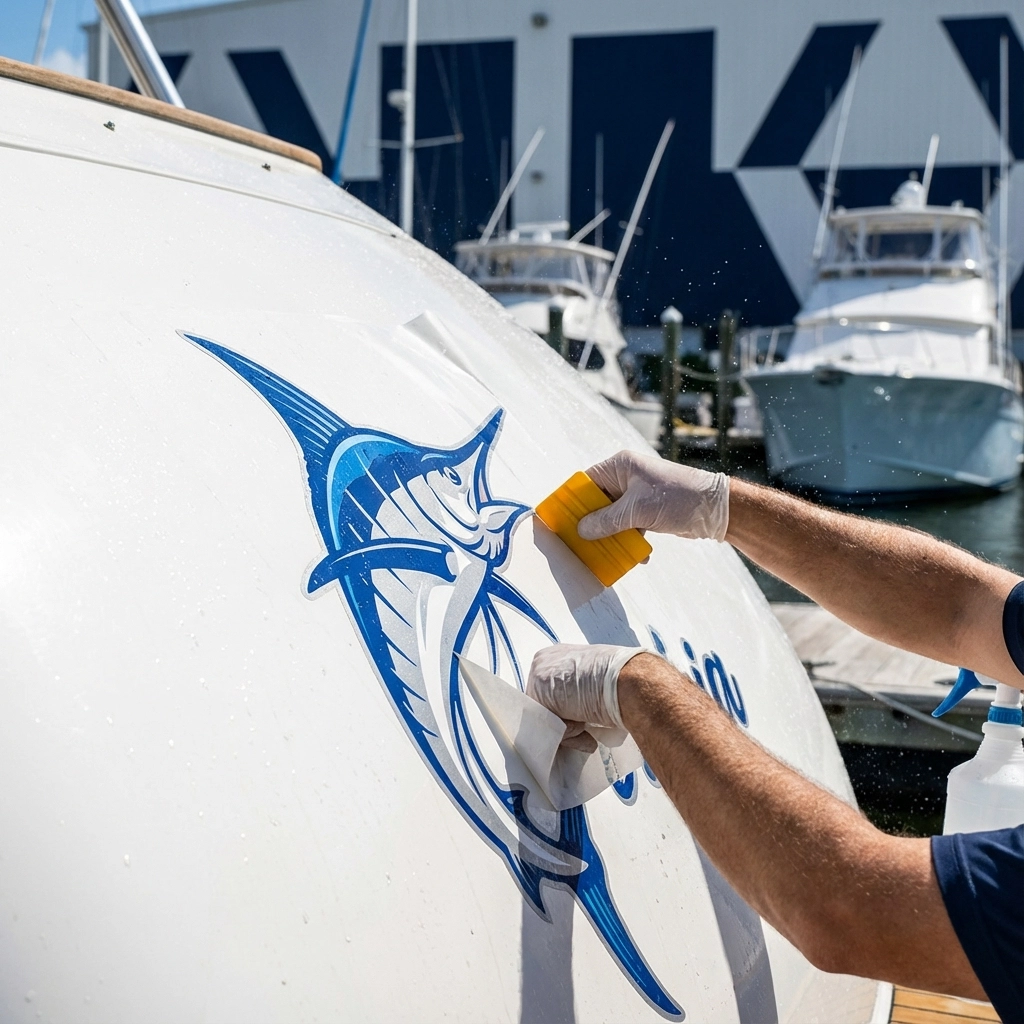
Installation Tips Specific to Boats

Installing boat decals has unique challenges you won't face with car decals:

Surface Preparation Is Critical Boat surfaces accumulate salt, wax, and marine growth:

  • Clean with marine degreaser first
  • Remove all wax and polish residue
  • Use alcohol wipe for final cleaning
  • Ensure surface is completely dry

Temperature Matters More Marine vinyl is more temperature-sensitive than regular vinyl:

  • Ideal temperature: 65-75°F for application
  • Avoid installation in direct sunlight when possible
  • Cold vinyl doesn't conform well to curves
  • Hot surfaces can activate adhesive too quickly

Dealing With Curves Boat hulls have complex curves that require special techniques:

  • Use a heat gun on low setting to make vinyl more pliable
  • Work in small sections on curved areas
  • Use relief cuts on inside curves to prevent bunching
  • Consider using conformable vinyl for extreme curves

Waterline Considerations If your decal will be near or below the waterline:

  • Use only premium marine vinyl
  • Seal edges with marine sealant if recommended
  • Avoid placing decals exactly at the waterline where they'll see constant water action

image_3

Getting Started With Your First Boat Decal

Ready to take the plunge? Here's your action plan:

Step 1: Plan Your Design

  • Measure your available space carefully
  • Sketch your design ideas on paper first
  • Consider how the design looks from different angles
  • Think about how it will age and whether you'll want to change it

Step 2: Choose Quality Materials Don't skimp on marine vinyl quality. The few extra dollars you spend upfront will save you from replacement costs and frustration later.

Step 3: Get Professional Help When Needed While simple text decals are DIY-friendly, complex graphics or full boat wraps are best left to professionals. At Mega Sticker Store, we work with boat owners to create custom designs that look professional and last for years.

Step 4: Maintenance Planning Even the best marine vinyl needs care:

  • Regular cleaning with marine soap
  • Avoid abrasive cleaners
  • Inspect edges periodically for lifting
  • Plan for eventual replacement (5-7 years for quality marine vinyl)

Common Mistakes to Avoid

Learn from others' experiences:

Using Automotive Vinyl It might be cheaper, but you'll pay more in the long run when it fails quickly in the marine environment.

Ignoring Local Regulations Registration number requirements vary by state. Check your local boating authority's requirements before ordering.

Poor Surface Prep Rushing the cleaning process is the #1 cause of premature decal failure.

Installing in Poor Conditions Wind, humidity, and temperature all affect installation success. Wait for ideal conditions.

Your boat is an investment worth protecting and personalizing properly. Quality marine decals not only look great but also hold their value better than painted graphics while giving you the flexibility to change your boat's look as your tastes evolve.

Whether you're adding simple registration numbers or creating a complete custom graphics package, taking the time to understand marine vinyl and proper installation techniques will ensure your boat looks sharp for years to come.

Prev Post
Next Post

Thanks for subscribing!

This email has been registered!

Shop the look

Choose Options

Edit Option
this is just a warning
Login