


UV Resistant Boat Decals: Australian Buyer's Guide
Last Updated: November 7, 2026
Quick Summary
UV resistant boat decals in Australia are vinyl graphics treated with UV-stable inks and protective laminates, designed to hold colour and adhesion under prolonged sun exposure. Choosing marine-grade vinyl with a UV overlaminate matters because Australian sun, salt spray and heat quickly fade cheap sticker vinyl.
- Cast vinyl conforms better to curved surfaces, while calendered vinyl suits flat or simply curved panels.
- A glossy overlaminate sheds water and salt residue and adds UV protection.
- Clean the hull with a mild degreaser and let it dry fully before applying adhesive.
- Upper, sun-facing surfaces fade first, while shaded transom graphics typically last much longer.
- Rinse decals with fresh water after salt exposure and avoid abrasive cleaners and solvents.
Table of Contents
- Marine-Grade Vinyl Boat Lettering: Choosing the Right Vinyl
- Printed Versus Cut-Vinyl Graphics: Side-by-Side Comparison
- How Long UV Resistant Boat Decals Last in Sun and Saltwater
- Custom Boat Registration Decals and Compliance Lettering
- Boat Decal Application: Surfaces, Prep and Avoiding Bubbles
- Boat Decal Removal and Replacing Faded or Peeling Graphics
- Choosing Your Next UV Resistant Boat Decal Set
- Frequently Asked Questions
Australian waters are some of the harshest on the planet for graphics, so choosing UV resistant boat decals in Australia matters from the start. Intense UV exposure, salt spray and high water temperatures all work against vinyl, and a decal that looks sharp on the showroom floor can fade or lift within a season. At Mega Sticker Store, we make Australian-made boat graphics from premium outdoor vinyl. This guide covers what to look for, how the materials compare and how to get the most life out of your decals.
UV resistant boat decals are vinyl graphics treated with UV-stable inks and protective laminates, designed to hold their colour and adhesion under prolonged sun exposure. The difference between a decal rated for outdoor use and a cheap indoor sticker shows up fastest on a boat, where the surface is sun-facing and rarely shaded.
Fading and edges lifting near the waterline are common signs that a decal is wearing out. When comparing options, look for a stated outdoor life, a UV overlaminate and a vinyl described as marine or automotive grade.
Our own range is made with premium outdoor vinyl and is described as UV and weather resistant. The Razor Edge Racing Stripes kit, for example, is supplied in 1200mm x 265mm and 2000mm x 440mm sizes and is described as UV, weather and saltwater resistant.
Marine-Grade Vinyl Boat Lettering: Choosing the Right Vinyl
Marine-grade vinyl boat lettering is typically cast or calendered vinyl with a UV-stable top layer, chosen for flexibility on curved surfaces and resistance to saltwater. The two constructions behave very differently on a boat, and the choice affects both how the decal applies and how long it lasts.
Cast vinyl is poured onto a casting sheet rather than being pressed through rollers, giving it a thinner profile that conforms well to curved surfaces. Calendered vinyl is thicker and stiffer, made by pressing the material through rollers. It suits flat or simply curved surfaces: cabin sides, flat panels, trailer sides and straight lettering runs. On a tight compound curve, calendered vinyl is more likely to lift at the edges or bridge a depression.
The finish matters as much as the film. A glossy overlaminate sheds water and resists salt residue, and it also adds a layer of UV protection over the ink or vinyl colour. A matt finish hides minor surface imperfections on older fibreglass and reduces glare, but it can show salt film and water spots more readily. Pick the finish based on the look you want, then confirm the outdoor rating and whether the laminate is rated for marine exposure.
Watch out: applying lettering to a freshly waxed or heavily polished hull can stop adhesive from bonding properly. Clean the surface with a mild degreaser first, then let it dry fully, adhesive needs a bare, dry substrate to grip.
Australian Standards for vinyl and signage materials
Printed Versus Cut-Vinyl Graphics: Side-by-Side Comparison
Printed graphics and cut-vinyl graphics solve different problems. Printed decals suit full-colour artwork, photographs and shaded designs, while cut-vinyl lettering suits solid colours, clean outlines and pinstripes. Each method has its place on a boat.
| Feature | Printed Graphics | Cut-Vinyl Graphics |
|---|---|---|
| Best for | Full-colour artwork, shading | Solid colours, lettering, stripes |
| Colour range | Unlimited | Limited to vinyl colours |
| Edge finish | Die-cut to shape | Clean cut, no background |
| Typical use | Fish, sharks, illustrations | Boat names, rego numbers |
Our Rankin Cod boat decal is an example of a full-colour printed graphic with a gloss overlaminate, available in 30cm or 50cm lengths for $45.00 AUD. For registration and name lettering, cut vinyl is usually the more practical choice.
How Long UV Resistant Boat Decals Last in Sun and Saltwater
Lifespan depends on the vinyl, the laminate, how much sun the boat gets and how the decal is cared for. Rather than a single number, it helps to think in exposure zones, because the same decal can last very differently depending on where it sits.
A decal on a boat that lives under cover or on a trailer kept in a shed lasts far longer than one on a vessel moored in open sun. The upper surfaces, bow, cabin top, sun-facing topsides, take the most UV and heat, and that is where fading and edge lift usually appear first. Surfaces that are frequently immersed or splashed, such as near the waterline, face a different stress: constant wet-dry cycling and salt residue work at the adhesive edge. Above-waterline graphics on a shaded transom generally outlast sun-facing topside graphics by a wide margin.
Actual decal life varies widely by location, mooring and maintenance. A boat kept in the water in the tropics ages graphics faster than one trailered and stored dry.
Maintenance is the variable owners control. Rinse decals with fresh water after salt exposure, wash with a mild pH-neutral boat soap, and avoid abrasive cleaners, solvents and high-pressure jets held close to edges. A coat of marine wax over the laminate, not over bare vinyl edges, helps shed water and salt. Check edges each season for lifting; a small lift caught early can often be re-adhered, while a neglected edge lets salt and water creep under the film.
Signs a decal is due for replacement include chalky or faded colour that no longer matches the original, curling or lifting edges that will not stay down, cracking in the film, and adhesive residue bleeding from under the edge. If fading is patchy across a set, replacing the whole set is usually more reliable than patching, because a new panel will not match the aged colour of the rest.
Custom Boat Registration Decals and Compliance Lettering
Registration numbers and compliance lettering must be clear, correctly sized and easy to read from a distance. Requirements are set by state and territory maritime authorities, so check the rules where your boat is registered before ordering. You can order custom boat name and rego decals once you have confirmed the size you need. You can also see the custom boat rego number options to compare sizing against those rules. Your authority's website is the place to confirm current sizing and placement.


Boat Decal Application: Surfaces, Prep and Avoiding Bubbles
Good application starts with a clean, dry, smooth surface at a moderate temperature. Wipe the area with a degreaser, then let it dry completely before positioning the decal.
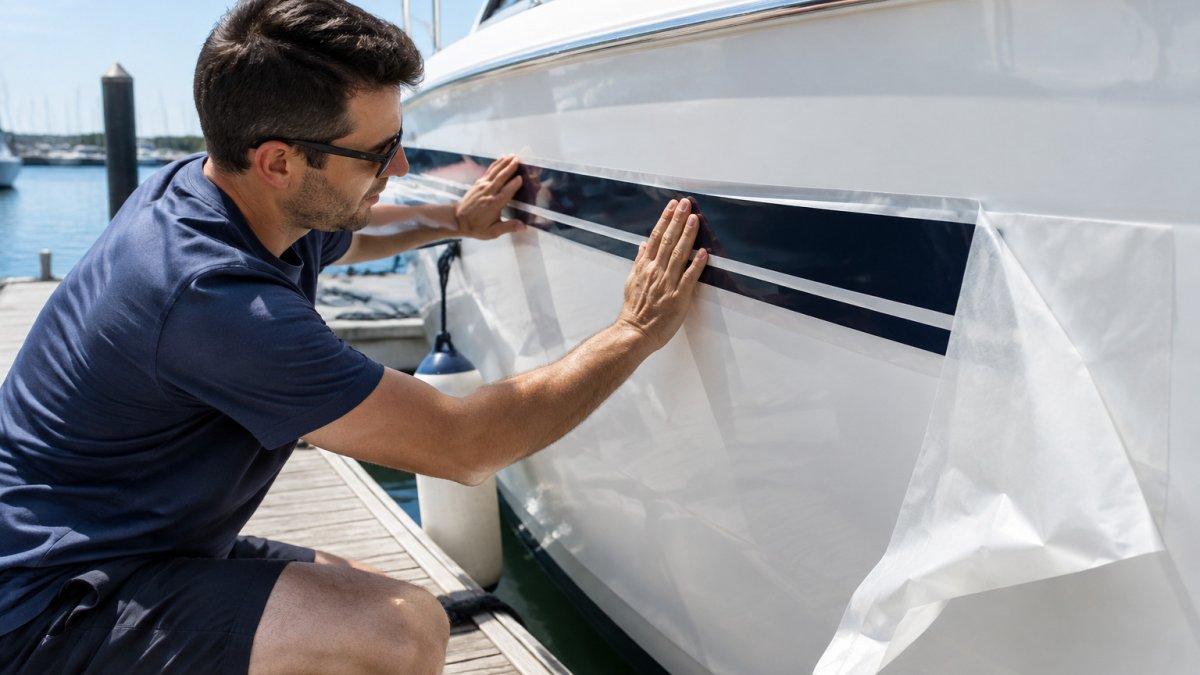
Avoid applying in direct midday sun or on a cold hull, as adhesive will not bond well. If you do get a bubble, lift the decal gently and reposition it rather than pricking the surface. Surfaces should be smooth and flat or gently curved; heavily textured gelcoat is not ideal.
Boat Decal Removal and Replacing Faded or Peeling Graphics
Removing an old decal is easiest with gentle heat from a hairdryer, which softens the adhesive so the vinyl can be lifted slowly. Peel at a low angle, and use a plastic scraper for stubborn edges. Finish with a marine-safe adhesive remover and a clean wash.
Choosing Your Next UV Resistant Boat Decal Set
Start with the look you want, then work back to the material. For a full-colour fish or shark graphic, look at the Large Vinyl Shark Boat Decal at 1000mm x 535mm for $85.00 AUD, or the Shark Teeth Boat Decal at $45.00 AUD for a smaller accent. For a sporty hull, the Dolphin Stripe Vehicle Decals start at $180.00 AUD and come as a left and right pair.
Our advice is simple: choose UV resistant, marine-grade materials, measure your surface carefully and apply in mild conditions. Explore our range of boat decals and choose a set that suits your vessel.
Get your boat looking its best with Mega Sticker Store. Our Australian-made, UV resistant decals are built for sun and saltwater, and our team can help you choose sizes and colours. Shop Australian Decals today.
Frequently Asked Questions
What material is best for UV-resistant boat decals?
Outdoor-grade, marine-grade vinyl with a UV-stable finish and a protective overlaminate is the standard choice for boats in Australian sun. Mega Sticker Store's boat decals, including the Rankin Cod, Razor Edge Racing Stripes and Shark Teeth designs, are described as marine-grade or premium outdoor vinyl that is UV and weather resistant and waterproof. Check that the listing states UV resistance and an overlaminate before you buy, because a plain indoor sticker will fade within a season or two of sun exposure.
How long do vinyl boat decals last in the sun?
Lifespan depends on the vinyl quality, the colours used, how much sun the hull gets and how the decal is maintained. Mega Sticker Store describes its boat decals as long-lasting and UV resistant, but no lifespan figure is published on the product listings, so treat any specific number of years with caution. Rinsing salt off regularly and keeping the surface clean will help a decal keep its colour for longer.
Are UV-resistant decals suitable for saltwater boats?
Yes, the listings for the Razor Edge Racing Stripes and the large shark hull decal both describe waterproof, saltwater-resistant or sun-and-salt-ready vinyl. Rinse your boat with fresh water after each saltwater trip and avoid harsh abrasive cleaners on the decal. Fit the decal to clean, smooth or slightly curved surfaces only, since rough or heavily textured surfaces will shorten its life.
How do you apply boat decals without bubbles?
Clean the hull with a mild detergent, dry it fully and make sure the surface is smooth and flat. Position the decal using the transfer tape, peel back the backing a little at a time and press from the centre outwards with a squeegee or soft cloth. Mega Sticker Store supplies transfer tape and step-by-step instructions with its boat decal kits, which helps keep air trapped under the vinyl to a minimum.
Vinyl Sizes and Prices Mentioned for Boat Decals
