


Vinyl Safety Stickers for Workplace Signs: A Practical Guide
Last Updated: November 8, 2026
Quick Summary
Vinyl safety stickers are self-adhesive labels that warn, instruct and identify hazards in the workplace. Choose wording, symbols and size to suit the viewing distance, use durable vinyl, prepare the surface properly, and check labels regularly for fading or lifting.
- Match size to viewing distance, since doors and machinery panels usually need larger labels than small containers.
- Use standard hazard symbols and signal words so staff recognise them at a glance.
- Choose UV resistant or waterproof vinyl for labels exposed to sun or washing.
- Clean and prepare the surface, and avoid applying to fresh paint that has not cured.
- Stickers supplement, but do not replace, compliant signs where a standard or regulator requires a permanent sign.
Table of Contents
- What Vinyl Safety Stickers Do on a Workplace Site
- Choosing Custom Safety Stickers Wording, Symbols and Size
- Vinyl Performance and Material Selection for Safety Labels
- Compliance: Australian Standards for Workplace Safety Signs
- Safety Sticker Application: Surface Prep, Placement and Removal
- Outdoor Safety Stickers: Durability, Maintenance and Replacement
- Ordering Your Workplace Safety Stickers
- Frequently Asked Questions
What Vinyl Safety Stickers Do on a Workplace Site
Vinyl safety stickers for workplace signs are self-adhesive labels that warn, instruct and identify. This guide walks through how to choose, order, apply and maintain them. Workplaces use these labels to mark hazards, restrict access and show staff what to do, without relying on memory or verbal briefings.
A good sticker does one job clearly. It should be readable from the distance where the risk is, and it should stay put in the conditions where it is installed. Most problems with workplace labels come from picking the wrong size, the wrong material or the wrong wording, rather than from the sticker itself.
Safe Work Australia guidance on workplace hazard communication
Warning and hazard labels
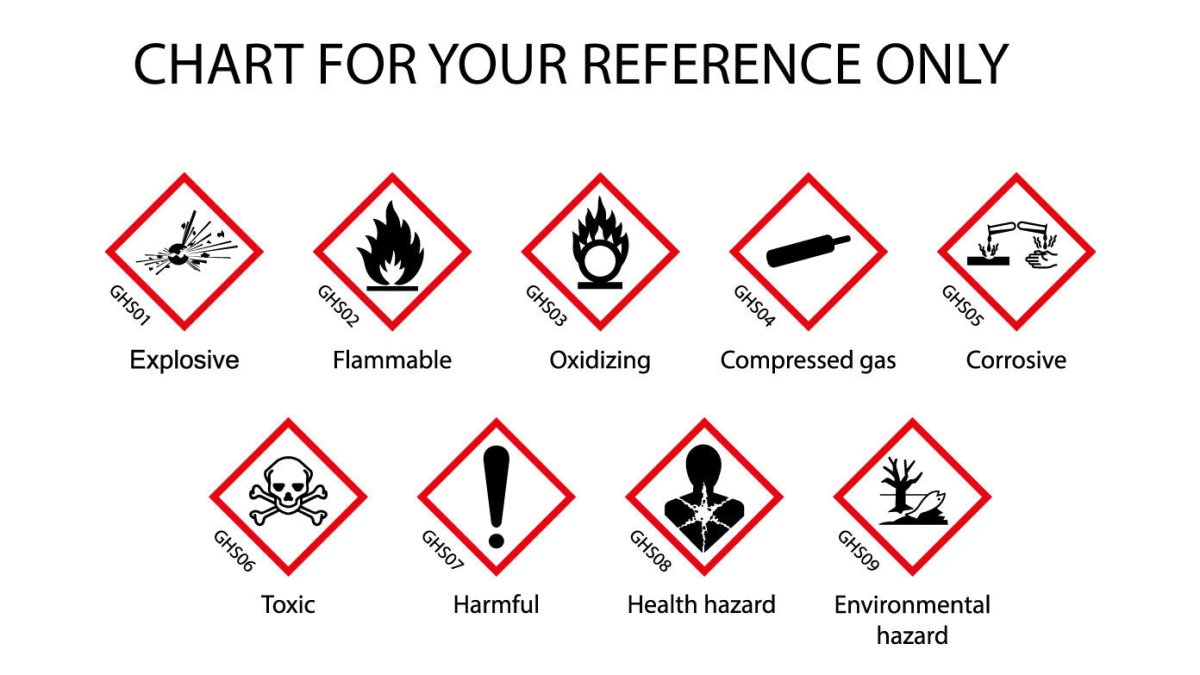
Warning labels alert people to a risk before they touch, open or enter something. A flammable liquid label on a storage cabinet, or a hazard symbol on a chemical drum, is the most common example. Use the standard symbol and signal word that match the hazard, rather than inventing a design, so staff recognise it at a glance.
Watch out: a faded or peeling warning label can be worse than none, because it signals that the hazard has been forgotten. Check hazard labels at each stock count.
Prohibition and mandatory instruction labels
Prohibition labels tell people what not to do, such as no eating or drinking in a storage area, or do not obstruct a fire door. Mandatory labels tell people what they must do, such as wear eye protection or wash hands. Both work best placed right where the action happens, at eye height, not on a distant wall.
Choosing Custom Safety Stickers Wording, Symbols and Size
Start with the message. Keep wording short and in plain language, and match any symbol to a recognised hazard or instruction. Custom wording is useful when your site has its own rules, such as a specific gate code process or a named contact, but avoid changing the meaning of standard symbols.
Size is the second decision. A label should be legible from the position a worker stands in when they need it. For small containers, a 20mm to 50mm label may be enough, while doors, gates and machinery panels usually need something larger. Our GHS Pictogram Printed Self Adhesive Vinyl Labels come in sizes from 20mm x 20mm to 100mm x 100mm, priced from $28.00 AUD.

For a bold door message, the Fire Safety Door Decal is 480mm wide and costs $22.00 AUD, so it reads easily from a distance. You can see the full design on the Fire Safety Door Decal product page.

The article's size guidance and product sizes can be compared at a glance:
| Product | Size range or width | Price (AUD) |
|---|---|---|
| GHS Pictogram Printed Self Adhesive Vinyl Labels | 20mm x 20mm to 100mm x 100mm | From $28.00 |
| Fire Safety Door Decal | 480mm wide | $22.00 |
| Vinyl Flammable Liquid Sticker | Various sizes and quantities | $45.00 |
Vinyl sticker prices and sizes from the article (AUD)
Vinyl Performance and Material Selection for Safety Labels
Vinyl suits most workplace labels because it is flexible, tough and easy to apply. Ask suppliers whether the material is UV resistant if the label will sit in sunlight, and whether it is waterproof if it will be washed or hosed down. Our guide to what makes vinyl UV resistant for Australian sun explains how it holds up under local conditions. Laminated finishes protect printed colour from scuffs and cleaning chemicals.
Our Vinyl Flammable Liquid Sticker, priced at $45.00 AUD, is digitally printed and UV laminated. It is made from durable vinyl and available in various sizes and quantities.

Compliance: Australian Standards for Workplace Safety Signs
Workplace labelling obligations sit under work health and safety (WHS) laws. Check your own state or territory regulator's current guidance before finalising a design.
Two standards do most of the practical work for safety signs. AS 1319 covers the design and use of safety signs for occupational environments. AS 1345 covers the identification of the contents of pipes, conduits and ducts. For chemical hazards, the Globally Harmonized System (GHS) pictograms are the reference point for hazard symbols.
A sticker is not automatically a compliant sign, and the relevant standard should be checked against your design. The practical test is whether the sticker conveys the hazard, the required action and the consequence in the standard format, at a legible size, in a position where it is seen before exposure.
Watch out: a sticker is not an adequate substitute for a compliant sign where the hazard requires a permanent, rigid sign, where the sign must be visible from a distance beyond what a small label can achieve, or where the relevant standard or regulator specifies a particular sign type. In those cases, use the sticker as a supplement, not a replacement.
Model WHS Regulations and hazardous chemicals labelling
Safety Sticker Application: Surface Prep, Placement and Removal
Adhesion depends heavily on surface preparation. Match the prep to the substrate.
On painted metal, wipe with an alcohol-based cleaner and let it flash off fully. Fresh paint needs to cure before application, most practitioners find that applying to paint that is still outgassing leads to bubbles and lifting, so allow the coating to reach its full cure time. On plastic, check that the surface is not a low-surface-energy type (polyethylene and polypropylene are common culprits); if it is, a standard acrylic adhesive may not grip and you may need a high-tack or specialist adhesive. On glass, clean and dry is usually enough, but avoid applying over silicone seals or edges. On textured or powder-coated surfaces, expect the adhesive to contact only the high points, which reduces grip, choose a thicker vinyl or a high-tack adhesive, and press firmly with a roller rather than by hand.
Temperature matters at the point of application. Adhesives are formulated to work within a range, and applying cold vinyl to a cold surface is a common cause of edge lift. Bring the sticker and the surface to a moderate temperature before applying, and press from the centre outwards to push air to the edges rather than trapping it in the middle.
Placement is a readability decision. Position warning labels where the hazard is visible before exposure, not after, and keep instruction labels at a comfortable reading height. Size the label to the viewing distance: a label read from arm's length can be small, but a label read across a workshop or from a doorway needs to be proportionally larger. Avoid seams, hinges, moving parts and areas that are rubbed or washed frequently.
Removal is where coatings get damaged. Warm the label gently, a hairdryer on a low setting is usually enough, and lift one corner slowly, keeping the vinyl close to the surface rather than pulling it away at 90 degrees. Pulling cold vinyl away from a painted surface can take the topcoat with it. Remove adhesive residue with a solvent that is compatible with the coating underneath; test on an inconspicuous area first, because strong solvents can dull or soften some paints and plastics. Wipe clean and let the surface dry before applying a replacement.
Outdoor Safety Stickers: Durability, Maintenance and Replacement
Outdoor labels face sun, rain, dust and cleaning. Check labels regularly for lifting edges or fading. Our guide to choosing vinyl for outdoor vehicle graphics compares which materials last best outdoors. Replace any label that is no longer legible, because a faded hazard sign does not protect anyone.
Keep a simple record of where each label sits and when it was last checked. This makes replacement quick and helps demonstrate that your site maintains its signage.
Ordering Your Workplace Safety Stickers
Before ordering, list every label you need, its location, its size and its wording. Check whether the design should be custom or a standard product, and confirm quantities for each site. Browse our range and choose the Fire Safety Door Decal, GHS labels or Flammable Liquid Sticker that match your list.
If you need a custom design, contact our team at sales@megastickerstore.com.au with your wording, symbols and sizes. Ordering the right labels once is cheaper than replacing faded ones later.
Frequently Asked Questions
What are vinyl safety stickers used for in workplaces?
Vinyl safety stickers mark hazards, prohibitions and mandatory actions on machinery, equipment, doors and storage areas. Common examples include flammable liquid labels, fire door notices and GHS pictogram labels on chemical containers. Because they are printed and laminated rather than painted, they can be applied quickly, replaced when damaged, and customised with site-specific wording. Choose the label type that matches the hazard and the reader's required response, then confirm the wording against the relevant Australian standard or Safe Work Australia guidance for your workplace.
How do I choose the right safety sticker for a workplace sign?
Start with the hazard and the required action: a warning label suits a risk, a prohibition label suits a banned action such as keeping a fire door open, and a mandatory label suits a required action such as wearing protection. Next, match size to viewing distance, since the message must be readable from where people actually stand. Check the material for the environment, using UV-laminated vinyl for sun-exposed or outdoor locations. Our Fire Safety Door Decal, for example, is 480mm wide and is designed for easy reading from a distance.
Are vinyl safety stickers suitable for indoor and outdoor use?
Yes, provided the vinyl is rated for the conditions. Indoor labels can use standard vinyl, while outdoor labels should be UV-laminated to resist fading and weathering. Our GHS Pictogram Printed Self-Adhesive Vinyl Labels are described as waterproof, UV-resistant and weatherproof, and our Flammable Gas and Flammable Liquid stickers are digitally printed and UV laminated for long-lasting use indoors or outdoors. Always check the surface type and expected temperature range before application.
How do you apply vinyl safety stickers without bubbles?
Clean the surface with a degreaser or isopropyl alcohol and let it dry fully, since oil and dust cause lifting. Peel the backing, position the sticker, then press from the centre outward with a squeegee or cloth to push trapped air to the edges. Apply in a moderate temperature rather than in direct sun or cold conditions, and allow the surface to settle before washing it.
