


What Makes Vinyl UV Resistant for Australian Sun?
Last Updated: October 25, 2026
Quick Summary
UV resistant vinyl is essential for vehicles exposed to the Australian sun because it contains chemical additives called UV inhibitors that absorb ultraviolet radiation and prevent fading, cracking, and peeling. Premium UV resistant vinyl includes a clear protective laminate that shields both the film and printed graphics from direct sun damage, maintaining colour and gloss finish for years.
- Cast vinyl is more sun-resistant than calendared vinyl because it maintains shape through temperature cycling without shrinking at edges.
- Permanent acrylic adhesives resist sun damage better than removable adhesives, which degrade faster under heat and UV exposure.
- A protective overlaminate is the single biggest factor in printed vinyl longevity, protecting ink from UV degradation.
- Marine-grade vinyl includes corrosion-resistant adhesives and resists hydrolysis for boats and water environments with constant moisture.
- Proper surface preparation, application in shade, and routine cleaning with mild soap extend vinyl lifespan significantly.
Table of Contents
- Why UV Resistant Vinyl Matters for Outdoor Vehicles
- How UV Inhibitors in Vinyl Protect Against Sun Damage
- Vinyl Types That Withstand Australian Sun Exposure
- Marine Vinyl UV Resistance for Boats and Water Environments
- Vinyl Graphics for Caravans: Choosing Durable Materials
- Outdoor Vinyl Care to Extend Colour Retention and Lifespan
- Ordering Custom UV Resistant Decals for Your Vehicle
- Frequently Asked Questions
Why UV Resistant Vinyl Matters for Outdoor Vehicles
UV resistant vinyl is essential for any vehicle that spends time outdoors. The Australian sun is relentless, and standard vinyl cannot withstand prolonged exposure without fading, cracking, or peeling. Whether you're personalising a caravan, boat, 4WD, or work vehicle, the right vinyl protects your investment and keeps graphics sharp for years.
At Mega Sticker Store, we focus on premium outdoor vinyl engineered to resist ultraviolet light and weather damage. The difference between cheap vinyl and quality UV resistant vinyl becomes obvious within months: one fades to a dull shadow of itself, while the other maintains its colour and gloss finish.
The real challenge is understanding what actually makes vinyl resist sun damage and choosing materials for the environment where your vehicle spends most of its time.
How UV Inhibitors in Vinyl Protect Against Sun Damage
UV inhibitors are chemical additives mixed into vinyl during manufacturing that absorb ultraviolet radiation before it can break down the material's molecular structure. Without them, sunlight weakens the polymers, causing fading, cracking, and peeling.
The most effective UV resistant vinyl contains multiple layers of protection.
Quality matters because not all UV inhibitors perform equally. Better formulations use stabilisers that block both UVA and UVB radiation, while cheaper vinyl contains basic inhibitors that slow fading but don't prevent it.
The adhesive backing also needs UV protection. Standard adhesives degrade in sunlight, causing edges to lift and corners to curl. Premium outdoor vinyl uses UV-resistant adhesive that maintains its grip through temperature fluctuations and sun exposure.
Vinyl Types That Withstand Australian Sun Exposure
Not all vinyl is created equal.
Cast versus calendared vinyl. Cast vinyl is poured onto a casting sheet as a liquid, settling into a thin, dimensionally stable sheet with low memory.
Adhesive types. Permanent acrylic adhesives are the standard for outdoor vehicle graphics because they resist plasticiser migration and maintain bond strength across temperature swings.
Laminate options. A protective overlaminate is the single biggest factor in printed vinyl longevity.
Printed versus cut-colour vinyl. Printed vinyl uses inks on top of the film, protected by the laminate.
Clear vinyl as an overlaminate. Clear vinyl is a protective layer applied over printed or coloured films, containing UV inhibitors that filter radiation while letting the graphic show through.
:::takeaway For outdoor vehicle graphics, prioritise cast vinyl with a permanent acrylic adhesive and a cast overlaminate. Cut-colour vinyl offers excellent colour retention for solid designs, while printed vinyl depends on laminate quality for UV protection. :::
Marine Vinyl UV Resistance for Boats and Water Environments
Marine environments demand vinyl that handles intense UV exposure and constant water contact. Saltwater, moisture, and temperature swings create conditions harsher than most land-based applications.
Marine-grade vinyl includes corrosion-resistant adhesives that don't degrade in salt spray or prolonged moisture, and the film resists hydrolysis, the breakdown caused when water penetrates the material. For detailed guidance on selecting marine vinyl products, explore custom boat name decals with UV resistance to find options engineered specifically for water environments.
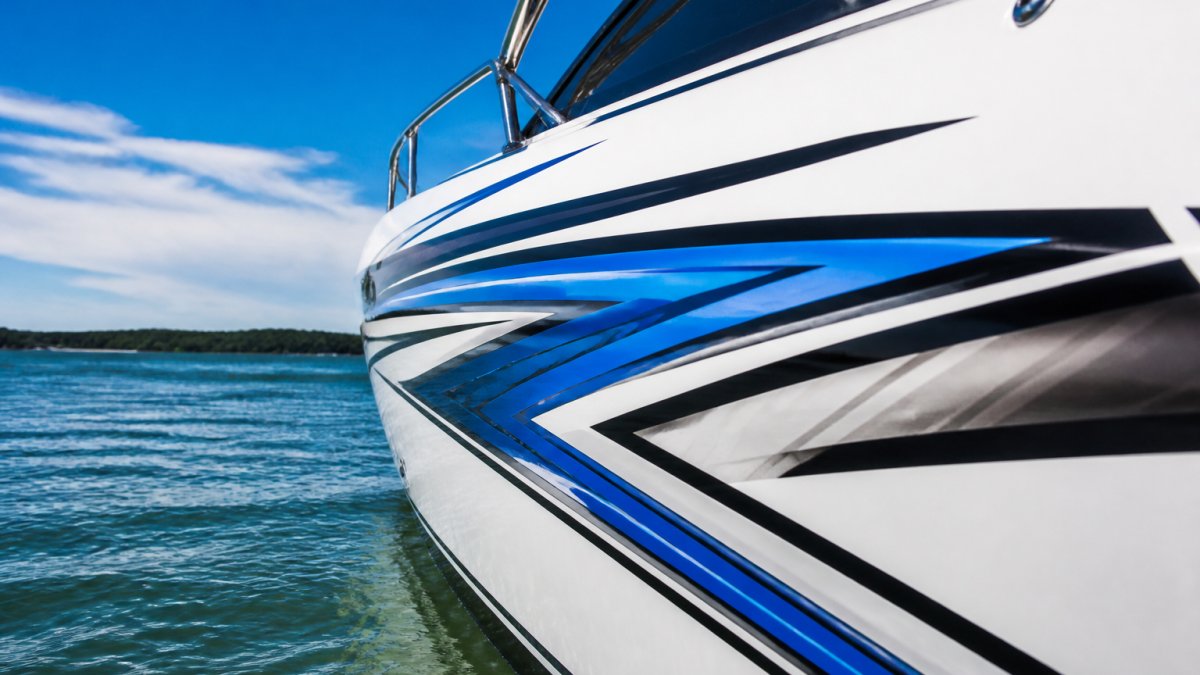
The gloss finish on marine vinyl serves a practical purpose beyond aesthetics. Products like the Rankin Cod Boat Decal use marine-grade vinyl with a gloss overlaminate specifically designed for this environment, the realistic fishing graphics maintain their sharp detail and colour vibrancy even on boats exposed to constant sun and spray.

For boats, placement matters as much as vinyl type. Hull graphics get more UV exposure than cabin sides, so some owners use marine vinyl on highly exposed areas and standard outdoor vinyl elsewhere. For consistency and longevity, marine-grade vinyl across all graphics eliminates this trade-off.
Vinyl Graphics for Caravans: Choosing Durable Materials
Caravans present a unique challenge because they're stationary for long periods, exposing graphics to uninterrupted sunlight. Unlike work vehicles kept in garages or shade, a parked caravan often sits in full sun for weeks or months.
The best vinyl for caravans combines UV resistance with flexibility. Caravan panels expand and contract with temperature changes, so the vinyl must move with the surface without cracking or peeling; rigid vinyl eventually fails at the edges.
Permanent UV resistant vinyl with a clear protective laminate is the standard choice for caravan graphics. Products like the Transform Your Ride: Custom Campervan Decal Kit are designed specifically for this application, UV resistant vinyl stripes that maintain their colour through years of outback travel and seasonal sun exposure.

You can explore UV resistant stickers for caravans and their selection criteria to deepen your understanding of material choices for this specific vehicle type. For horse floats and similar trailers, custom vinyl options designed for these vehicles provide guidance on selecting graphics that withstand the unique demands of specialised outdoor equipment.
Rankin Cod Boat Decal, Realistic Fishing Sticker for Boats and Utes, Marine →
Outdoor Vinyl Care to Extend Colour Retention and Lifespan
Even the best UV resistant vinyl requires proper installation, care, and removal to reach its full lifespan.
Surface preparation before application. Vinyl bonds best to a clean, dry, smooth surface.
Application in hot conditions. Warm vinyl is more pliable and conforms to curves, but excessive heat makes the adhesive too aggressive and causes premature tack.
Routine cleaning. Regular cleaning removes dirt, salt spray, and contaminants that degrade the vinyl surface.
Inspection and repair. Check edges and high-exposure areas periodically for lifting or bubbling. Small lifts can often be reseated with gentle heat and pressure.
Removal without damage. Gentle heat from a heat gun or hairdryer softens the adhesive and reduces the risk of pulling paint or gelcoat.
:::warning Pressure washers can damage vinyl decals, especially if the nozzle is held too close or at a sharp angle. The force of the water can lift edges and force moisture under the adhesive layer, leading to peeling. :::
Storage and seasonal care. If your vehicle sits unused for extended periods, park in shade or use a protective cover, particularly for caravans during off-season storage. Even UV resistant vinyl benefits from reduced sun exposure when the vehicle isn't in use.
Why Vinyl Stickers Peel: Causes and Prevention explains the mechanics of peeling and how to prevent it through proper care and maintenance, which is essential knowledge for anyone investing in quality vinyl graphics.
Ordering Custom UV Resistant Decals for Your Vehicle
Ordering custom UV resistant decals requires understanding a few key specifications to ensure you get exactly what you need.
Start by measuring your vehicle carefully. Curved panels, wheel arches, and irregular shapes require precise measurements, which is why professional measurement or consultation is valuable.
Specify your vinyl type clearly.
Ask for a proof before production. Seeing your design on a digital mockup or printed sample helps catch issues early.
Lead times vary. How to Apply Vinyl Decals to Caravans: A Step-by-Step Guide covers installation once your decals arrive, so planning ahead ensures you have time for both production and application before you need your vehicle ready.
The Premium 98 Fuel Identification Stickers demonstrate how custom vinyl serves practical purposes too, safety compliance stickers made from outdoor-grade UV resistant vinyl that maintain their visibility and adhesion through years of use.

UV resistant vinyl is a practical investment that protects your vehicle's appearance and your custom graphics. Get started with Mega Sticker Store and transform your vehicle with graphics designed to withstand years of Australian sun exposure.
| Vinyl Type | Best For | UV Protection | Durability |
|---|---|---|---|
| Permanent vinyl with laminate | Caravans, boats, 4WDs | Excellent | 5+ years |
| Marine-grade vinyl | Boats, water vehicles | Excellent | 5+ years |
| Printed vinyl | Custom graphics, photos | Good (depends on laminate) | 3-5 years |
| Cut-colour vinyl | Solid colour designs | Very good | 5+ years |
| Removable vinyl | Temporary graphics | Fair | 1-2 years |
According to research on vinyl durability in harsh climates, materials engineered with UV inhibitors and protective laminates significantly outperform standard vinyl in outdoor environments. The Australian Bureau of Meteorology guidance on UV exposure confirms that UV intensity varies significantly across regions, with inland and tropical areas experiencing particularly intense radiation. For vehicle owners seeking professional guidance on material selection, industry standards for outdoor vinyl performance provide technical specifications that help identify truly UV-resistant products versus marketing claims.
Frequently Asked Questions
Is outdoor vinyl UV resistant?
Yes, quality outdoor vinyl is specifically manufactured with UV inhibitors to resist ultraviolet light and prevent fading. Premium vehicle-grade vinyl includes a protective laminate layer that shields the printed graphics from direct sun exposure. However, not all vinyl is equally UV resistant, permanent vinyl with UV protection and a gloss overlaminate offers significantly better durability than basic vinyl. When purchasing decals for caravans, boats, or 4WDs, confirm the product specifies UV resistance and outdoor waterproof properties.
How long does UV-resistant vinyl last outdoors?
High-quality UV resistant vinyl typically lasts 5-7 years outdoors in harsh Australian conditions, depending on sun intensity, surface preparation, and maintenance. Marine-grade vinyl and vinyl with protective laminates can perform at the longer end of that range. Factors affecting lifespan include the quality of the adhesive, how well the surface was cleaned before application, and whether you rinse and dry the decals regularly. Cheaper vinyl or vinyl without UV protection may fade noticeably within 2-3 years.
What should I look for when choosing vinyl for a boat or caravan?
Look for marine-grade or outdoor-grade vinyl with explicit UV resistance claims and a protective gloss overlaminate. Check that the product is waterproof and designed for prolonged sun exposure. Marine vinyl UV resistance is critical because boats face constant water spray and intense reflected light off the water. For caravans, vinyl graphics should be permanent adhesive vinyl (not temporary), die-cut to shape to avoid peeling edges, and applied to clean, smooth surfaces. Confirm the supplier offers custom sizing to fit curved panels or unusual shapes.
How can I stop vinyl graphics from fading in the sun?
Choose vinyl with UV inhibitors and a protective laminate from the outset, this is your first line of defence. After installation, rinse your decals with fresh water every 2-4 weeks to remove salt spray, dust, and contaminants that accelerate fading. Dry them gently with a soft cloth. Avoid harsh chemicals or abrasive scrubbing. Park in shade when possible, especially during peak UV hours. If your decals are in a high-traffic area or exposed to intense midday sun year-round, expect to replace them sooner than those in partly shaded spots.
Does UV-resistant vinyl also withstand heat?
UV resistant vinyl is designed to handle both ultraviolet light and heat from sun exposure, but extreme temperatures can still affect adhesive performance. Vinyl begins to soften above 50°C and may lose grip on the surface. In intense heat, the adhesive can weaken, causing edges to lift or peel. Apply decals in mild conditions (15-25°C) and allow 24 hours for the adhesive to set fully before exposing the vehicle to direct sun or heat. This is especially important for caravans and boats that sit in full sun during summer.
How do I care for outdoor vinyl graphics?
Rinse decals regularly with fresh water and dry with a soft cloth to remove salt, dust, and UV-accelerating contaminants. Avoid pressure washers or harsh chemicals that can damage the laminate or lift edges. If you need to clean stubborn marks, use mild soap and lukewarm water with a soft sponge. Check edges every few months for lifting, especially on curved surfaces like caravans. If peeling starts, dry the area completely and press down gently. For boats, rinse after exposure to salt water. Proper maintenance extends the lifespan of UV resistant vinyl by 1-2 years.
What's the difference between permanent and temporary vinyl for outdoor use?
Permanent vinyl has a stronger adhesive formulated to bond permanently to surfaces and resist environmental stress. It's designed for long-term outdoor exposure and won't lift or peel easily. Temporary vinyl has a weaker adhesive and is intended for short-term use (weeks to months). For vehicles, boats, and caravans exposed to sun, wind, and water, permanent UV resistant vinyl is essential. Temporary vinyl will fail quickly outdoors and is not suitable for anything left in the elements longer than a season.
