


7 Reasons Cheap Vinyl Stickers Peel So Fast
Last Updated: October 30, 2026
Quick Summary
Cheap vinyl stickers peel quickly because the material is too thin, the adhesive is weak, and there is no protective laminate to hold the edges down. Thin face film stretches and curls at the edges, while low-grade adhesive lets go once the surface heats and cools. Most of these are construction problems, not user error.
- Thin face film stretches during application, curls at the edges and shrinks as it cures, pulling the adhesive away.
- A clear over-laminate seals the edge, blocks UV and stops scratching, which cheap stickers lack.
- Clean the surface with 70% isopropyl alcohol and dry it fully before applying any decal.
- Apply vinyl decals between 18°C and 25°C, since below 10°C the adhesive turns stiff and will not flow.
- Replace the sticker when the film has cracked, shrunk or faded, or the adhesive has gone dry or powdery.
Table of Contents
- Why Cheap Vinyl Stickers Peel Quickly: The Seven Causes
- Material Failure vs Application Failure: A Diagnostic Guide
- How to Stop Vinyl Stickers From Peeling: Surface Prep and Application Pressure
- The Best Temperature to Apply Vinyl Decals
- How to Fix Peeling Vinyl Stickers (and When to Replace Them)
- How Long Do Outdoor Vinyl Stickers Last?
- Choose Australian-Made Decals That Stay Put
- Frequently Asked Questions
Why Cheap Vinyl Stickers Peel Quickly: The Seven Causes
Cheap vinyl stickers peel quickly because the material is too thin, the adhesive is weak, and there is no protective laminate to hold the edges down. For the full breakdown of why vinyl stickers peel and how to prevent it, read our detailed guide.
Here are the seven causes in short:
- Thin face film that stretches and curls
- No over-laminate to seal the edges
- Weak adhesive that never fully bonds
- Poor surface preparation before application
- Wrong application temperature
- Trapped moisture under the film
- Sun, heat and weather breaking down low-grade materials
Most of these are construction problems, not user error. That matters, because it changes how you shop.
Thin Face Film and No Over-Laminate
The face film is the visible vinyl layer, and cheap stickers use the thinnest grade available. Thin film stretches during application and curls back at the edges. It also shrinks as it cures, which pulls the adhesive away from the surface.
Premium decals add a laminate over the printed film. This clear top layer seals the edge, blocks UV, and stops scratching. Without it, a cheap vinyl sticker has nothing protecting the bond.
Weak or Non-Permanent Adhesive
Adhesive strength is where cheap stickers cut the deepest corner. Low-grade adhesive grips well enough to sell, then lets go once the surface heats and cools.
Permanent vinyl is built to stay put for years. Removable vinyl is designed to lift cleanly. A bargain sticker often sits between the two, so it neither holds firm nor releases cleanly, and leaves adhesive residue behind.
Material Failure vs Application Failure: A Diagnostic Guide
Before you blame the sticker, work out which failure you actually have. Peel back a lifted corner and look at what you see.
| What you see | Failure type | What it means |
|---|---|---|
| Clean adhesive, smooth surface | Application failure | Surface was dirty, too cold, or not pressed firmly |
| Adhesive stuck to the surface, film lifting | Material failure | Adhesive let go of the film, often a cheap adhesive formulation |
| Bubbles and wrinkles under the film | Application failure | Trapped air or moisture during application |
| Cracks and fading across the print | Material failure | No UV protection in the film or laminate |
| Lifting only at corners and edges | Either | Edge seal or surface curve issue |
| Adhesive residue left behind | Material failure | Low-grade adhesive broke down rather than releasing cleanly |
| Film stretched or distorted | Material failure | Face film too thin to hold its shape |
The pattern matters. If the adhesive stays on the panel and the film peels away, no amount of better prep will save that sticker. Replace it. If the whole sticker lifts cleanly with the adhesive attached, your surface prep is the likely culprit.
Match the symptom to the surface
The same symptom can point to different causes depending on what the sticker is stuck to. Use this surface-by-surface check to narrow it down.
- Glass: Lifting usually means contamination, glass carries invisible oils and fingerprints that stop the bond forming. Clean adhesive on the glass points to prep; adhesive stuck to the film points to a weak adhesive that could not grip the smooth surface.
- Plastic: Many plastics are low-surface-energy materials that permanent vinyl struggles to wet out. If the sticker lifts cleanly with no residue, the adhesive was never suited to the plastic. A cheap sticker often uses a general-purpose adhesive rather than one formulated for low-energy surfaces.
- Painted metal: Paint can be porous or chalky. If the film lifts but leaves adhesive behind, the paint surface was too rough or contaminated for the adhesive to anchor. If the adhesive comes away with the film, the adhesive itself is the weak link.
Indoor versus outdoor failure patterns
Indoor peeling is almost always application or surface related, contamination, cold application, or a low-energy plastic. Outdoor peeling adds environmental breakdown: UV exposure makes cheap film brittle, heat cycles soften weak adhesive, and moisture works under lifted edges. If an indoor sticker fails within days, suspect prep. If an outdoor sticker fails within a season, suspect construction.
When peeling can be repaired versus when replacement is better
A small edge lift on an otherwise intact sticker is repairable. Clean under the lifted edge with isopropyl alcohol, dry it fully, apply gentle heat from a hairdryer on low to soften the adhesive, and press down with firm, even pressure.
Replace the sticker instead when:
- The film has cracked, shrunk, or faded
- The adhesive has gone dry or powdery
- The peel covers more than a small edge
Patching a failing sticker wastes time. A cracked film with no laminate will keep failing, no matter how well you press it.
How to Stop Vinyl Stickers From Peeling: Surface Prep and Application Pressure
You stop vinyl stickers from peeling with two things: a clean, dry surface and firm, even pressure across the whole decal. Most lifting starts with contamination or trapped air, not bad vinyl. But the steps below go further than general advice, they give you measurable conditions and surface-specific guidance so you can tell whether your prep is actually good enough.
Clean to a measurable standard
- Wash the panel with soapy water and a lint-free cloth, then rinse thoroughly. Dishwashing liquid is fine; avoid anything with added moisturiser or wax.
- Wipe the area with isopropyl alcohol at 70% concentration. This strips oils, fingerprints, and wax that soap leaves behind. Let it flash off, it evaporates in seconds.
- Dry fully with a clean lint-free cloth. Any moisture left behind will lift the film later, especially on non-porous surfaces.
- Test the surface: it should be smooth, dry, and non-porous. Run a fingernail across it, if it catches on texture, the sticker will struggle to conform.
Match the adhesive to the surface
Not every surface accepts permanent vinyl equally. Use this as a practical guide:
- Glass and smooth painted metal: Ideal for permanent vinyl. Clean, dry, and apply firm pressure.
- Low-energy plastics (many automotive interior plastics, polyethylene, polypropylene): Permanent vinyl may not wet out. Clean with alcohol, apply firm pressure, and expect a longer cure. If the sticker lifts cleanly with no residue, the adhesive was never suited to the plastic.
- Textured or grained surfaces: Contact area is reduced. Use a thinner, more conformable film and press firmly into the texture. Edges will always be the first to lift.
Apply with pressure you can measure
- Peel the backing slowly and keep the film off the surface until you are ready to place it.
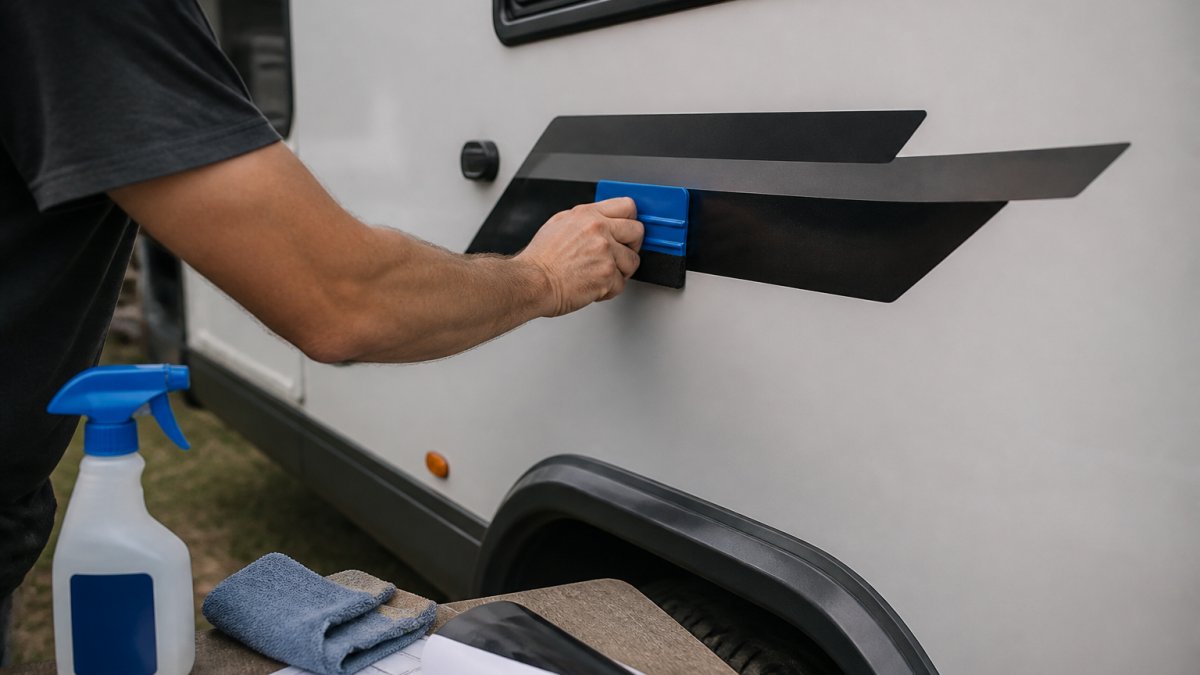
- Press from the centre outward with a squeegee or plastic card. Use firm, overlapping strokes, roughly 2-3 passes across the whole decal.
- Work out air bubbles as you go, pushing toward the edges. Small bubbles often disappear after a few days as the adhesive flows; large ones need to be worked out.
- Run firm pressure along every edge and corner last. Edges are where peeling starts, so give them extra attention, two or three firm passes with the squeegee.
Give the bond time to cure
Pressure-sensitive adhesive does not reach full strength immediately. The bond can continue to improve over the following days as the adhesive flows into the surface. Avoid washing, waxing, or exposing the sticker to heavy rain during that window. A common mistake is applying a decal and immediately running the vehicle through a car wash, the adhesive has not had time to cure, and the edges lift.
Fly Fishing Car Sticker Premium Printed & Laminated Vinyl Decal →
How cheap construction changes the prep equation
Here is the angle most guides miss: on a cheap sticker, perfect prep may still not be enough.
For a full walkthrough on caravans, see our guide on how to apply vinyl decals to caravans. If you are working around curves and odd angles, our article on applying custom vinyl graphics to curved surfaces covers the technique that keeps edges down.
The Best Temperature to Apply Vinyl Decals
The best temperature to apply vinyl decals is between 18°C and 25°C, on both the air and the panel. Below roughly 10°C the adhesive turns stiff and will not flow into the surface.
A few practical rules:
- Let the vehicle sit in shade before you start.
- Avoid applying in direct afternoon sun.
- Do not apply in wind or dust.
A common mistake is applying a decal in a cold shed in winter, then wondering why the corners lift in summer. The adhesive never bonded properly in the first place.
How to Fix Peeling Vinyl Stickers (and When to Replace Them)
You can fix a peeling vinyl sticker if the adhesive is still tacky and the film is intact. Clean under the lifted edge, dry it, then press it back down with firm pressure. A little gentle heat from a hairdryer on low helps the adhesive flow.
Replace the sticker instead when:
- The film has cracked, shrunk or faded
- The adhesive has gone dry or powdery
- The peel covers more than a small edge
Patching a failing sticker wastes time. A cracked film with no laminate will keep failing, no matter how well you press it.
How Long Do Outdoor Vinyl Stickers Last?
Outdoor vinyl stickers can last for years when made from premium vehicle-grade vinyl with UV protection. Cheap stickers without a laminate can fail far sooner under strong sun and weather.
Longevity comes down to construction. Our article on what makes vinyl UV resistant for the sun explains how that protection works.
Storage matters too. Vinyl has a shelf life, so keep spare stickers flat, cool and out of direct sun.
Choose Australian-Made Decals That Stay Put
The simplest way to avoid peeling is to skip cheap vinyl stickers and buy decals built for outdoor use. Our Fly Fishing Car Sticker is a good example: printed and gloss laminated, with a UV-blocking gloss over-laminate and a heavy-duty outdoor vinyl base, designed to handle severe weather and high-pressure commercial car washes.
Our decals are made from premium outdoor vinyl, with custom sizes and colours for caravans, motorhomes, 4WDs and boats. If you want to see the difference a laminated decal makes, shop Australian decals and compare the construction for yourself.

Frequently Asked Questions
Why do vinyl stickers peel off vehicles?
Most peeling comes from one of two sources. Cheap vinyl stickers often use thin face film, no UV over-laminate and a light adhesive that lets go within months of sun and rain. The other cause is application: dust, wax residue or moisture trapped under the sticker stops the adhesive bonding properly. A premium laminated decal applied to a clean, dry, smooth surface at the right temperature will hold far longer than a budget sticker on the same panel.
How can I stop a vinyl sticker from peeling?
Clean the panel with rubbing alcohol or soap and water, then let it dry completely. Apply in mild conditions, with both the panel and the sticker at a comfortable working temperature. Press from the centre outward with a squeegee or credit card to push out trapped air, then run firm pressure along every edge. Avoid washing the vehicle for a while so the adhesive can cure.
Can I fix a sticker that is peeling at the edges?
Small edge lift can often be repaired. Lift the loose corner gently, clean away any grit or old adhesive residue, warm the vinyl slightly with a hairdryer on low, then press it back down with firm squeegee pressure. If the adhesive has dried out or the vinyl has hardened and cracked, replacement is the better option. A laminated decal like the Fly Fishing Car Sticker is printed and gloss laminated for outdoor use.
Can I apply a vinyl sticker to a cold or wet surface?
No. Moisture under the film turns to vapour in the sun and pushes the sticker off, and cold vinyl is stiff so it will not conform to curves or hold its adhesive. Wait for a dry day, or move the vehicle into a shed. If you must apply in cooler weather, warm both the panel and the decal gently first, then press firmly and leave it to cure.
Cheap stickers peel because thin film, weak adhesive and no laminate cannot survive sun, heat and weather. If you are tired of re-sticking lifting corners, Mega Sticker Store makes Australian-made decals from premium outdoor vinyl, with UV-blocking laminate and custom sizes and colours for your vehicle. Get started with Mega Sticker Store and fit decals that stay put.
